Extreme Weather: Hurricanes

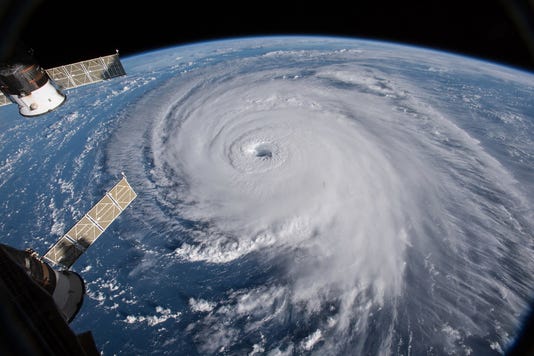
During this past unit we have learned about several extreme weather events including tornadoes, acid rain, blizzards, monsoons, etc. The one that stuck out most to me was hurricanes. Hurricanes are increasingly more common and the US experiences at least disastrous one ever year for the past couple of years. Hurricanes are tropical storms that average about 75 mph winds and cause major damage to houses, buildings, roads, and power lines. Hurricanes also cause major damage from flooding that occurs due to the heavy rain it brings.

Image result for hurricane

The most recent hurricanes to have hit the United State were Hurricane’s Florence and Michael which hit the summer of 2018. Florence produced over 40 inches of rain within a 24 hour period in the Carolinas. It damaged some roads so badly that it took weeks to reopen 100 miles worth of freeway. Hurricane Michael caused similar damage in Florida and Georgia. The storm was only one mph away from being categorized as a level 5 storm. It is considered one of the four most powerful hurricanes to ever have hit the United States.

Image result for hurricane

How “Water Sharing” Works

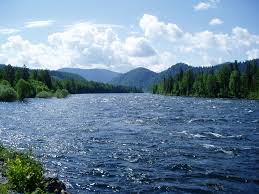
In Environmental Systems this week we learned about what happens when a community shares one body of water as it’s only source of water. We learned that it is possible for one member of such a community to use up all the water and leave none for the rest of the citizens. For example, a battery manufacturing company could use too many MAFs, or million acre feet and leave not enough water for the local ranches or housing developments. Systems like this exist in naturally dry areas such as Nevada or Arizona.

Another issue that comes along with these water rights is that of pollution. The further upstream an organization is, the more impact they have on the water for the rest of the community. An example of this is if a dairy farm lie at the top of a river, it has the possibility of causing oxygen deprivation in the river as well as contributing salts to the river. People downstream will then have a lower quality water source due to the pollution that the dairy farm caused.

download

Land Management: Pesticides

Almost every single farm in the United States in the 1950s and 60s used pesticides. Organic farming had just been just recently introduced and didn’t become a common practice until years later. At this point in time, every farmer used some kind of chemical pesticide on their crop.

One pesticide that was commonly used was the insecticide DDT (Dichlorodiphenyltrichloroethane). The chemical was commonly used and had a positive connotation with it until a scientist named Rachel Carson discovered some of the hidden side effects of it. In 1962, Carson released her book Silent Spring which told the world of her findings. She noticed that birds that were eating the bugs infected by the DDT couldn’t lay eggs and the shells were cracked. At first, everyone told Carson she was crazy and that DDT was a miracle for the farming industry. It wasn’t until people starting getting cancer or starting having fertility issues that they truly realized the danger.

Image result for rachel carson

Today farmers have several options to keep pests and weeds away from their crops. There are safer pesticides, biopesticides (natural), and also an organic approach. Pesticides are just one factor that farmers have to think about when it comes to land management. Other factors include irrigation, labor choices, and harvesting techniques.

Image result for pesticides

WALL-E: Pixar’s Way of Gently Exposing a Harsh Reality

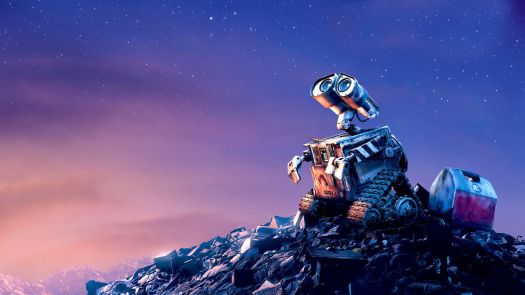
We all know that humans are killing the planet slowly and if you didn’t know that well it’s true! Well in 2008, the movie company Pixar decided to make a film in order to point out the harsh reality of our planet’s health in a way that would appeal to the rising generation. And that movie is Wall-E. If you haven’t seen Wall-E, it is a sweet animated movie about a lonely robot living on Earth in the late 2700s. He lives alone and spends his days on the dusty planet stacking trash and collecting old relics with a cockroach as his only friend. Well, one day he meets a new sleek robot called Eve who came to earth to collect a specimen. Throughout the movie, Wall-E falls in love with Eve, she brings a plant back to the spaceship that carries the entire human race and we see what has become of our population. Well to sum it up, the entire human race has become extremely overweight, technology dependent, lazy, and have lost all appreciation for the beauty that once existed on Earth.

This entire movie was made for people to realize what we, as humans, are becoming. After watching this movie, I personally, want to treat the planet better and appreciate it more. This movie also connected to what we are learning in class about land use. When we see Wall-E’s planet we see a dusty gross trash pit.

If we keep living our lives the way we have, our planet will become this! And yes, you can say: “By the time this happens I’ll be dead!” But why should we ruin the planet for future generations? We already hate that past generations have gotten it to this point: with oceans full of plastic, dozens of different species of animals going extinct, forests being cut down, etc. Why should we make it even worse when we can help turn it around? One way we can do this is by reducing our ecological footprint. If we limit the resources we use and try to live more efficiently we can help reduce pollution and resource depletion.

Do you really want the Earth to end up like Wall-E’s? Wouldn’t you rather be able to enjoy nature in person rather than viewing it from a screen on a crowded spaceship?

walle

Population Distribution

In class last week we learned about population distribution. We learned that in nature, there are 3 types of ways that animals and plants space themselves out in their environment. Those three ways are uniform, random, and clumped.

SmartSelect_20181114-101532_Google.jpg

The first method of distribution is uniform. One example in nature that you can see of this in when looking at a species of bird called Cape Gannets. These birds live off the coast of New Zealand and are a perfect example of uniform distribution. The birds are very territorial and so naturally they space out evenly in order to maintain their own territory. Despite their territorial aggression, there is strength in numbers which is why they still stay in a large flock. SmartSelect_20181114-102526_Google.jpg

The second form of distribution is random. This concept is hard to see in many species of animals but it is often the most common form of distribution seen in plants. Dandelions are a prime example of this, when dandelions reach a certain age they release their seeds into the wind. Since the plants cannot control the wind or the animals their seeds land on, the seeds are spread randomly around. Once those seeds grow, the process starts all over again.

SmartSelect_20181114-102623_Google.jpg

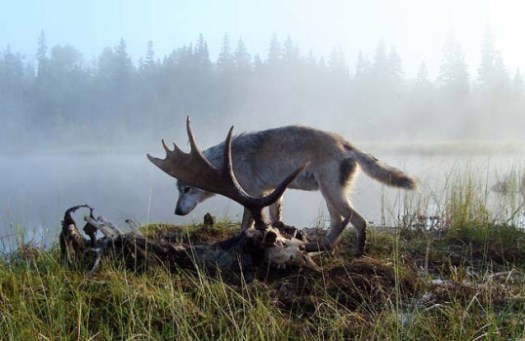
The last form of distribution is clumped. This dispersion can be seen in most species of animals that stay in large groups such as elephants or certain types of schooling fish. One example that can be seen in the Unites States is the wolf. Wolves stay in relatively large packs and travel around their territory. The only time the wolves are not together is when the mothers stay back to raise cubs while the other members go and hunt.

SmartSelect_20181114-102713_Google.jpg

Depending on where you live, humans can fall into any of the three categories of distribution. In cities people are often very uniform, living in apartment buildings on blocks. In the suburbs, people are often clumped into neighborhoods where there are 20-30 houses in a neighborhood with neighborhoods that are spread throughout a city. And then in rural areas there is often random distribution, with houses spread out between large spaces of land. Everyone has a preference of how they like to live, which way sounds most appealing to you?

The Predator and Prey Relationship

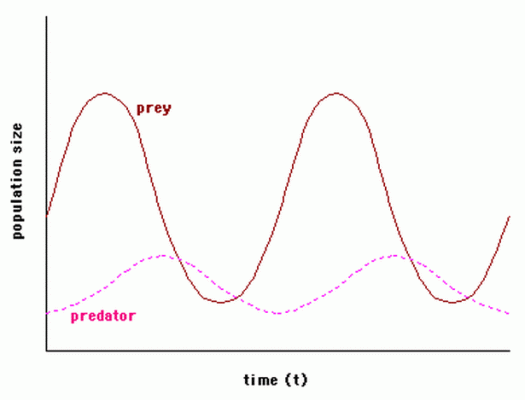
Almost every species in the world has some sort of predator and therefore is a type of prey. Whether that be an insect or a rabbit, there is always another animal keeping the population in check. In class last week we learned about the relationship that most prey and predators have, in terms of population. We learned that as the population of the prey rises so does the population of the predators. We also learned that if the population of the predators gets too high then the population of the prey will start to decrease, which will, in turn, lead the predator population to decrease as well. prey

One example of this relationship can be seen between wolves and moose, specifically on Isle Royale. These specific populations have been studied for decades and have given the most accurate representation of the predator and prey relationship. After observing these groups the researchers studying them realized that when the wolf population starts to decrease the moose population it also keeps a check on the wolves. Isle Royale is located in Michigan and is an accurate representation of the relationship because of the controlled environment, the animals cannot leave the island but the island has enough room for their populations to rise and fall.

wolf.jpg

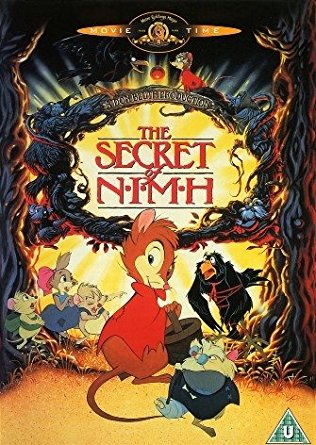
The Secret of NIMH

ming.jpgThe movie the Secret of NIMH is essentially a movie that calls out how humans have negatively impacted the environment and specifically animals. The first animal welfare issue the movie focuses on is how farms have impacted the lives of rodents such as mice, rats, and shrews. Before the agricultural revolution, these animals could live peacefully in fields and not be disturbed by plows or other farming equipment. The mouse family that the movie focuses on struggles with being able to relocate her family before the farmer plows his field. All of the animals that live in the area know that their homes will be destroyed in the plowing process and are forced to uproot their lives in order to move. Unfortunately, the mouse, Mrs. Brisby, cannot do this because her son had pneumonia and can’t move.

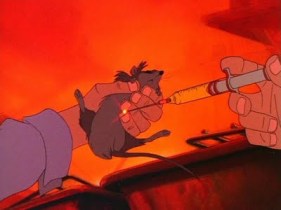
The second issue that this movie covers in the issue behind animal testing. The rats in the movie had once been used in animal testing labs and had been treated poorly and had been injected with a drug that rewired their brains and caused them to focus on other things besides finding food and basic survival. We later find out that NIMH stands for the National Institute of Mental Health and the rats and mice used in the experiment were basically being tortured and then given an injection that gave them human-like minds.

nimh3

This part of the plot basically shows how humans over time have used animals for their own benefit without thinking of the long-term or even short-term effects on the animal. Even though this still goes on today we are seeing slow but steady improvement towards recognizing animal welfare and not using them for our own gain.

PETA_Logo_animal_testing

One example of this is on September 28, 2018, the entire state of California banned the sale of animal-tested cosmetics which has been highly debated over for the past several years. Also in recent time, California banned full-service restaurants to give out plastic straws. I guess more states need to look at California’s example because we only have one Earth and it would be a shame to destroy it.

The Modern Day Commons

       In the late 1960s, a man named Garrett Hardin wrote an essay called “The Tragedy of the Commons”. Hardin’s essay essentially pointed out the issue that occurs when multiple groups of people share the same resource. He said that individuals tend to think of the short-term need for the resource and how they don’t think about the long-term consequences on the environment or about sharing the resource equally. He points out that without a set group that has the resource’s best interest in mind, other people will overuse it and eventually lead it to be nonexistent.

So how does this apply to today?

Well, there is a multitude of resources that everyone on this planet shares and overuses. One example of this is the ocean, the ocean is shared by a variety of different nations, not one with the sole authority to pass laws regarding its use. Because of this, we have had many problems arise due to things like overfishing, littering/pollution, and dying habitats such as coral reefs.  Each nation manages to protect their own coastlines but none really control anything beyond that, which has become a major problem in the overall health of our planet’s oceans. Massive piles of garbage called gyres have been created in spots where currents meet and form a circular pattern. Because of these islands of garbage both our marine species and bird species are being harmed. ocean-cleanup-PROMO.jpgOne example of a piece of trash’s life is this: Trash goes into the ocean, trash gets caught up in a current, trash meets a bunch of other trash and form a floating pile of trash, fish mistake trash for food, fish’s stomach gets full of trash and causes it to get sick, bird eats fish, bird gets sich because it also cannot digest the trash, bird dies, both bird and fish populations dwindle, biodiversity of the ocean decreases. This situation happens all the time and in many different varieties. Our oceans are being destroyed, luckily we have many different groups trying to make a change.
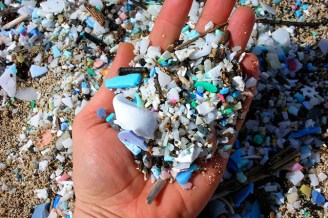
CaptureThere are many different ways we can help our oceans. One way is to reduce our use of plastic and recycle or compost all of our other waste. Another way is to not litter and pick up any trash we see. Lastly, we can also donate to organizations trying to make a difference.

Save our oceans!
How Humans Impact the Environmental System

Over time humans have impacted the environment both positively and negatively. Most of the time, the human intentions are positive but the environmental impact turns out to be negative. For example, since the beginning of time humans have needed shelter to survive. After we progressed to the point where we built houses out of lumber we needed to create a lumber industry. Even though the industry was necessary, it was devastating in many parts of the world. Forests started to be cut down and therefore habitats destroyed. deWhen habitats are destroyed many kinds of animals are forced to vacate and either their population can’t survive or they disrupt a different ecosystem. Something a lot of people don’t realize is that one impact doesn’t affect just one aspect of a system but can create a chain reaction and affect multiple factors of the system.

Even though many human actions cause negative impacts on the environment, there are a few that lead to positive change. For example, something as simple as riding your bike to school or work instead of driving can make an impact. When riding your bike you are not only not using gasoline but you are also not bikereleasing pollution into the environment. And like I said earlier, you can lead to a positive chain reaction. When you ride your bike instead of drive you are influencing everyone around you and can lead to more bikers instead of drivers. You are also not contributing to traffic and congestion.

All in all, anyone and everyone can make an environmental impact! Let’s make it a positive one!

First Blog Post

My first blog post for this class relates back to what I learned in class this past Thursday. We learned about the basic definition of a system and gave different examples of systems on Earth and systems that we deal with in our everyday lives. We learned that systems have inputs and outputs and that the different elements of a system work together to perform or accomplish a common goal. I can apply this concept to my everyday life, particularly at my job. I work as for the Sammamish YMCAymca as a Kids University staff member. Essentially Kids U is an after school program where the staff teach the kids several different lessons until their parents pick them up. These lessons can vary from sports, to art, to science, etc. I have figured out that the program in a system in the way that it has an input (the kids come to the program to learn), functioning parts inside (the staff members work to teach the kids), and an output (the kids go home learning something new and being able to apply it to their lives). Sometimes the job doesn’t run smoothly but all systems have their flaws.


Design a site like this with WordPress.com
Get started